Some of my first experiences of feeling the pressures to conform to traditional masculinity are entwined with growing up brown in a very white town and schools. Like many boys, I saw sports as my way into belonging and connection.
In middle school gym class, I was small and ungainly. Standing in a line up against the fence, as one of only two racialized boys, I was always picked last. And when I walked up to bat invariably the outfield dropped their gloves and sat down in the grass. By high school I yearned to belong to the culture of white boys. Trying out for the basketball team I couldn’t manage a layup or foul shot. Meek on the football field, I fumbled the ball, and at 112 pounds was at risk of injury. No surprise I was cut from both teams.
Finding Belonging in the Ring
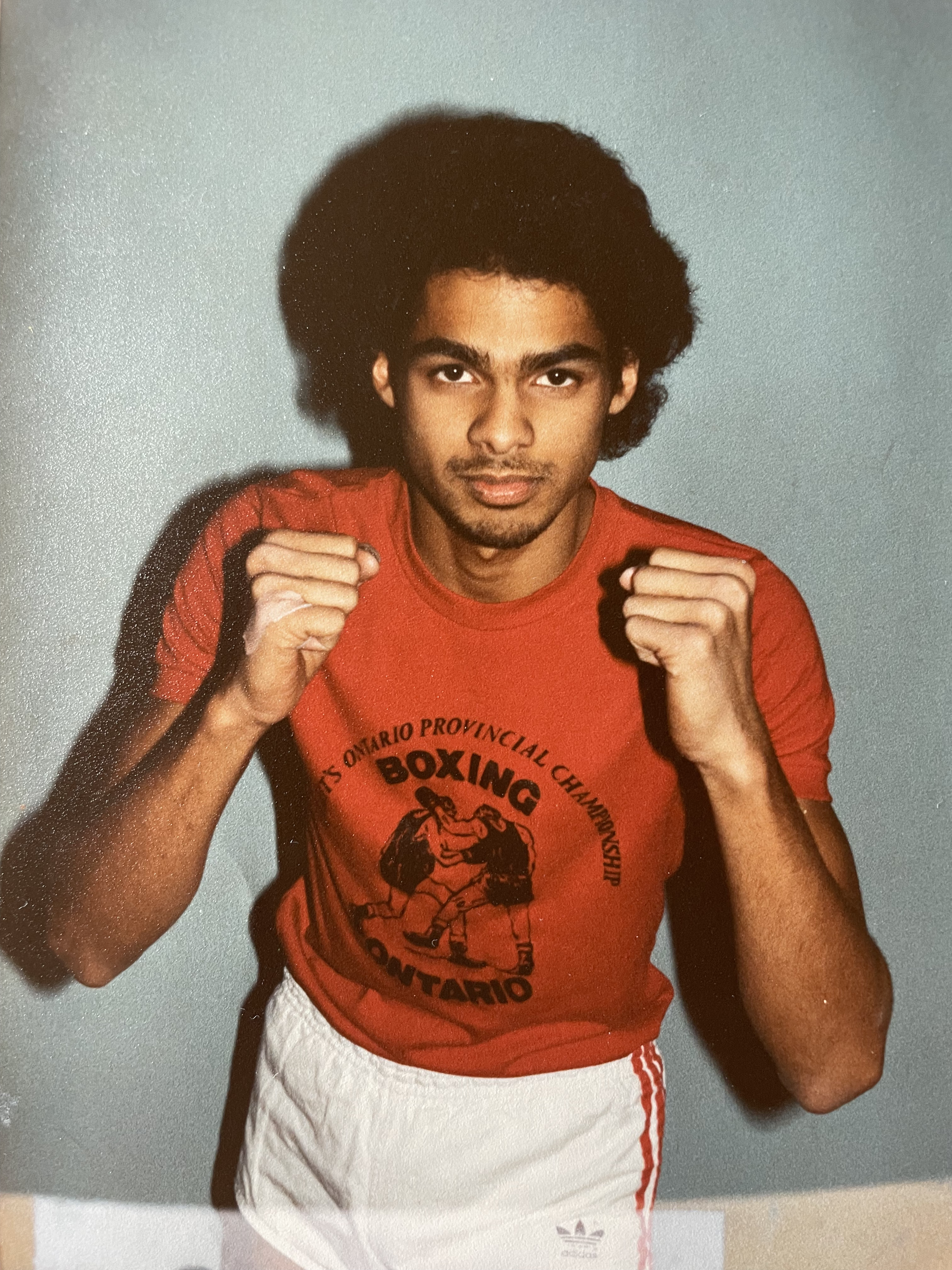
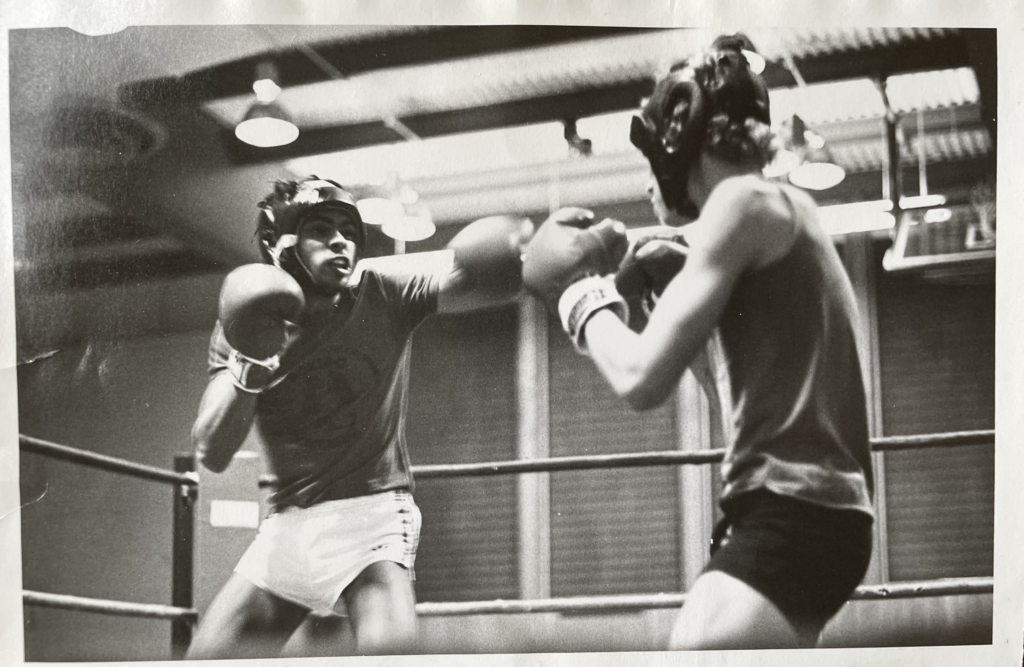
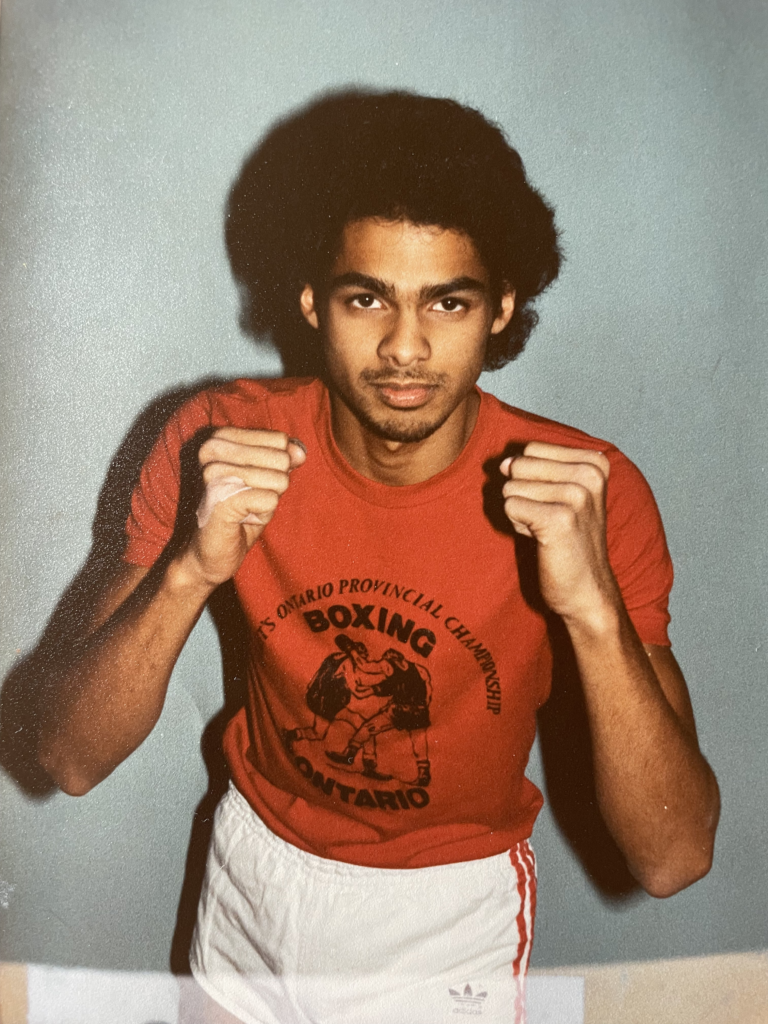
My father encouraged me to join a newly formed boxing club. While my size hadn’t changed, in the ring, weight classes gave me a chance to earn the masculinity that was “expected” of me. And while I didn’t win a single bout in competition, I’d finally gained some athletic notoriety as one of only two boxers in my high school. Some of the boys started calling me Sugar Ray, and when I began to grow a scruff in my final year of high-school, they called me Roberto Duran instead. As a young man I grew confidence by stretching myself in hand to hand combat. While throwing and receiving punches was unfamiliar terrain, I found camaraderie in the unspoken agreement to hit and be hit. We also shared an intrinsic motivation for pushing our bodies to extremes. My heart pounded and my breath came in waves as an unfamiliar aliveness overtook my meekness. Boxing became a lifeline with which to cling to through the inadequacies of teenage life.
Despite failing at traditional sports, I’d found belonging in this hyper-masculine space.
Discovering Another Way
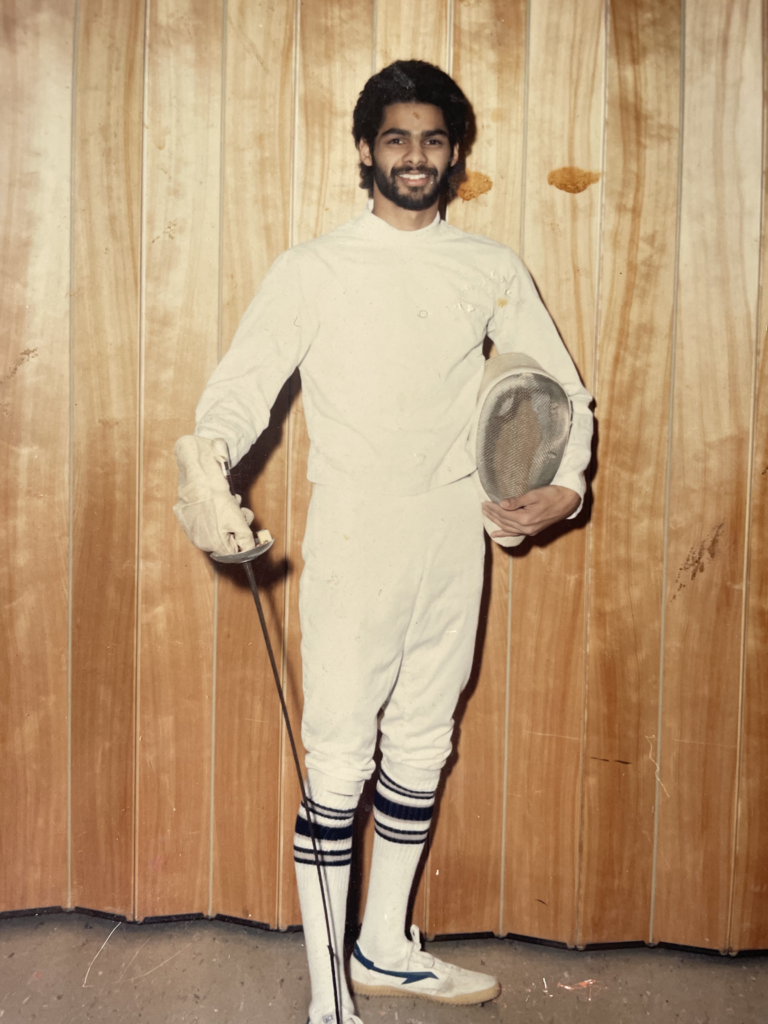
In university I took up fencing. While still a sport based in combat, it emphasizes finesse, precision, and skillfulness over strength, brutality, and inflicting injury. And while some of my teammates were laden with misogynistic attitudes, they were also my first community of racially diverse peers. They were from Armenia, India, China, Pakistan, and Canada; they were Muslim, Hindu, Christian, and Jewish. Returning to the boxing gym for a workout during visits home, the other boxers chided me that fencing was “unmanly” and “gay”. Wary of their judgments I didn’t tell them about my growing passions for writing poetry and yoga. Eventually I turned my back on the boxers.
By my third year, I reached the provincial finals, which was a very big deal for me because I was finally excelling in a sport. An ACL tear in my left knee dashed my fencing career, a disappointment I still carry. In my graduating year, unable to compete because of my injury, I helped as assistant coach for the foil team who eventually won first place in the provincials. For my efforts the team presented me with the Most Valuable Player Award for that year, a prize I value more than my university degree.
Looking back at high school and university I wonder – how do these collective beliefs around masculinity have such a hold on boys and young men? If we can’t compete and excel in traditional sport, will we ever be enough and find belonging? These questions have transformed into a deep exploration for me and has led me to a career of working with boys and men. I encourage them to examine the culture of traditional masculinity, and offer an alternative of listening deeply so our true selves might emerge. These explorations require us to embrace vulnerability in a community of peers.
On Listening and Vulnerability
I use this quote from Parker Palmer frequently in my work with men related to mental health and gender-based violence prevention:
“Violence is what happens when we don’t know what else to do with our own suffering.”
I’ll often state that violence can be internalized by way of addictions to substances and behaviors, self harm and self medicating, and suicide, etc. The stats for men are at crisis levels in all these measures: three out of four suicides in Canada are committed by men, and 80% of overdose deaths are by men, and suicide is the second leading cause of death in young people ages 15-34.
Violence can also be externalized through misogyny, homophobia, gender based violence, homicide, etc. And again these statistics are predominantly higher for men. In Canada the homicide rate is three times higher for men and boys than girls and women; while men and boys tend to underreport instances of gender-based violence and sexual assault the perpetrators of these acts of violence on all genders are predominately males. For those men and boys who identify as racialized the stats for both internalized and externalized violence are higher.
Traditional messages of masculinity elevate violence and promote a disconnection from men’s emotional selves and separate us from other people.
Traditional messages of masculinity elevate violence and promote a disconnection from men’s emotional selves and separate us from other people. These messages reinforce an inability to be vulnerable, to express feelings, to ask for help when we most need it; and increase the need to put on personas to demonstrate a perceived notion of masculinity. All these behaviors and experiences lead to poor mental health outcomes and poor or unhealthy intimate relationships.
Practicing Vulnerability Together
This is where the practices of Listening and Vulnerability come in. In The World We Know is Possible, we create a space where men can let down their guard of how they should show up as a man. Within the Circle of Trust® container, they can show up as their full selves. Bryan, a participant in our last circle shared: One of the biggest highlights for me was how intentionally this space held reflection and relationship at the same time. I also really appreciated how vulnerability was invited but never demanded. That allowed trust to grow naturally and made the experience feel safe, honest, and deeply human. (Bryan, North Carolina)
Vulnerability is a practice and if men don’t have opportunities to flex this muscle…to get their reps in…they lose the capacity for vulnerability, those muscles atrophy. And when we are not flexing these muscles of vulnerability, we are unable to share honestly with peers, we separate and isolate ourselves. A Circle of Trust for men, creates opportunities for vulnerability, for deep sharing and deep listening.
Listening is also a practice. When I listen to my true self, in the context of other men–I may hear a boy who has been harmed by others, or the patriarchy. A boy who needs comfort and reassurance. When I really listen to other men, I provide a space for men to be heard, to be vulnerable, to explore some of their hidden wholeness without fear of being fixed, advised or corrected.
These are extremely rare places for men that can heal.
Register today for The World We Know is Possible, a Circle of Trust® retreat beginning in December!
Please confirm you want to block this member.
You will no longer be able to:
Please note: This action will also remove this member from your connections and send a report to the site admin. Please allow a few minutes for this process to complete.